Notes
Riding your next career wave

Software engineering is changing fast. Choosing your next career move feels a lot like riding a wave. Ideally, you would wait for the biggest wave of your life. But you could sit on your board waiting forever.
For engineers facing redundancy, waiting may not even be an option. There is an income to replace and a competitive market to navigate. The next move needs to work with the opportunities available now. Sometimes you have to choose a wave, commit and paddle as hard as you can. The ride is yours to make something of, and to enjoy.
So which waves can we actually see, and are they worth committing to now? I've pulled together current hiring data and research to help us make that call. I'm working through the same questions. Use this as a starting point for your search.
Where the jobs are now
The latest US JOLTS release, published on 29 September, estimates August vacancies and actual hires by industry. Australia's ABS release, published on 1 October, provides a separate August vacancy snapshot.
These are estimated vacant positions across all occupations, rather than counts scraped from job boards. They identify where employers need people; they do not tell us how many software engineers they need.
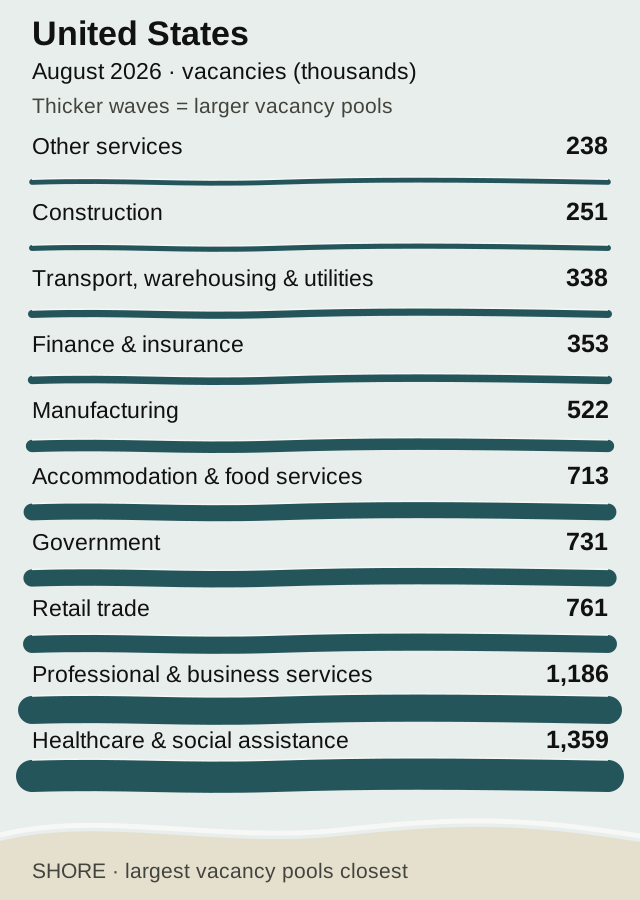
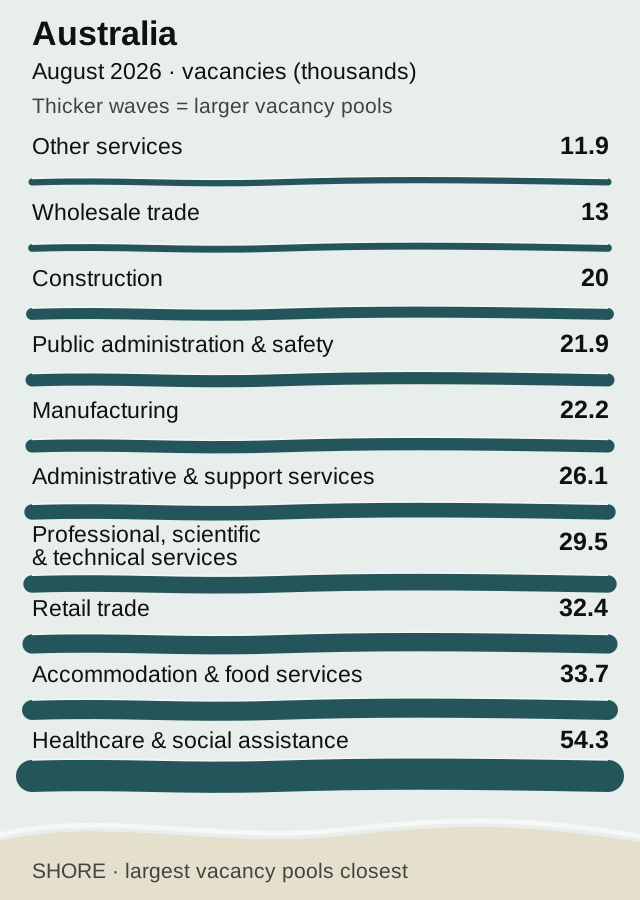
A view from above: thicker waves mean more vacancies, with the largest pools nearest shore. Distance shows ranking, not arrival time or ease of getting hired. Each country has its own thickness scale and industry classifications. Smaller pools can still contain work relevant to engineers.
Healthcare leads both lists. Manufacturing ranks sixth in each. Hospitality and retail also have substantial vacancies. But high vacancy counts can reflect turnover or sector size: LinkedIn's September report records US healthcare hiring 12.1% lower year on year in August.
Where to put your energy

The vacancy counts tell us where to look. The next step is finding funded engineering work within those employers: connecting data, automating operations and keeping important systems reliable and secure. That is the common thread I would follow through healthcare, manufacturing, finance and energy.
Starting with the largest pools near the shore, the breakdown follows the US ranking before looking beyond the charts at investment. Use it to focus your search for specific teams and projects.
Healthcare: data and operational systems
Healthcare combines a large vacancy pool with identifiable technical gaps. The OECD's July 2026 paper finds secure data exchange remains underachieved; its March AI report identifies fragmented data and infrastructure barriers.
For engineers, the opportunity to investigate is integration, data quality and dependable deployment at established providers and technology suppliers. Look for a team funded to solve those problems.
Business services, retail and public services: follow the project
These large pools deserve a look too. Specialist suppliers integrating complex systems, commerce platforms improving fulfilment and teams delivering public services are practical targets. The distinction is how close engineering sits to a funded customer need. In professional services, that leads me towards domain specialists; the routine-delivery model needs more scrutiny below.
Manufacturing: automation and industrial software
Manufacturing sits sixth in both charts and recorded 332,000 US hires in August. Equipment monitoring, production planning and supply-chain integration are concrete areas to investigate.
A project that reduces downtime or improves throughput has a measurable purpose. That is the engineering work worth asking about when you speak to these employers.
Finance and cybersecurity: protecting essential systems
Finance and insurance reports 353,000 US openings and 10,200 Australian vacancies, below Australia's top ten. Payments, identity and operational resilience are technical areas worth exploring within those employers.
Cybersecurity also spans the other sectors. Gartner's February 2026 forecast puts global security spending at USD244 billion, growing 11.6% at constant currency. Look for teams translating that spending into work protecting systems customers depend on.
Energy and grids: a smaller pool with an investment case
Utilities sit inside the US transport and warehousing group; Australia reports 3,900 vacancies in electricity, gas, water and waste. Energy earns a place here because the IEA's Electricity 2026 forecasts 3.6% annual electricity-demand growth through 2030 and calls for grid investment to rise roughly 50%.
The report also identifies monitoring and early detection as priorities. For engineers, that suggests investigating grid operators, storage businesses and suppliers building forecasting and operational systems. Follow the funded projects behind the forecast.
AI infrastructure and defence: beyond the vacancy charts
The IEA's April outlook projects data centre electricity consumption rising from 485 TWh in 2025 to 950 TWh in 2030. Compute infrastructure is worth exploring where customers, funding and utilisation support expansion.
Europe's SAFE programme paid Estonia EUR351.6 million in August. Defence has visible financing, but clearance and procurement timelines affect access. Neither sector has a standalone comparable count in these charts.
Where to be more selective

The same sector can contain employers with very different prospects. Being selective means looking closely at what customers will keep paying for as AI changes the market. Keep exploring these areas, with particular attention to businesses adapting successfully.
Professional and business services: routine delivery
This is one of the biggest waves in the charts: 1,186,000 US openings, ranked second. Australia's differently defined professional, scientific and technical services category ranks fourth, with 29,500 vacancies. Those numbers make it worth exploring, while checking the delivery model.
Anthropic's June 2026 research observes greater task delegation on Claude Code than on its chat products. My inference is that services priced around routine coding hours face pressure as customers can delegate more implementation. The concern is routine delivery within these broad categories.
Ask what the team contributes beyond code: domain knowledge, complex integration, reliability or responsibility for a customer outcome. Those are stronger reasons to commit than a promise to supply more developers.
Education technology: selling answers
Education is a continuing need, but homework-answer subscriptions deserve scrutiny. Chegg's Q2 2026 results reported total revenue down 51% year on year and listed AI competition among its risks. Its skilling revenue grew 2%, showing why we should examine the product rather than write off education altogether.
Before joining, ask why learners or institutions will keep paying. Look for evidence of value in assessment, institutional integration or learning outcomes beyond answers available from general AI tools.
Digital media: dependence on search traffic
Publishing and content platforms are another familiar home for engineers. Cloudflare's July 2026 report describes content being consumed by AI without corresponding referral traffic, putting pressure on advertising and affiliate revenue.
For an engineering career here, check whether paying subscribers, direct audience relationships or licensing revenue can sustain the team as discovery changes.
Choose, then commit
Turn the sector list into a shortlist of employers. Ask what the team is funded to deliver, why customers will keep paying and what you could learn there. Weigh that alongside pay, colleagues and your circumstances. A practical role that restores income and builds experience can be a good wave too.
Our engineering value extends beyond building software. Learn how a clinician makes decisions, a factory handles downtime or a grid operator balances supply. Spend time with users and follow the consequences of what you ship. That knowledge helps you solve better problems today, and gives you something to carry into your next role.
We cannot know whether the next wave will be bigger. We can make a thoughtful choice with the information available, then give it our effort. Once you commit, paddle properly: learn, build relationships and ship useful work. Make the most of the wave you're on, and enjoy the ride.